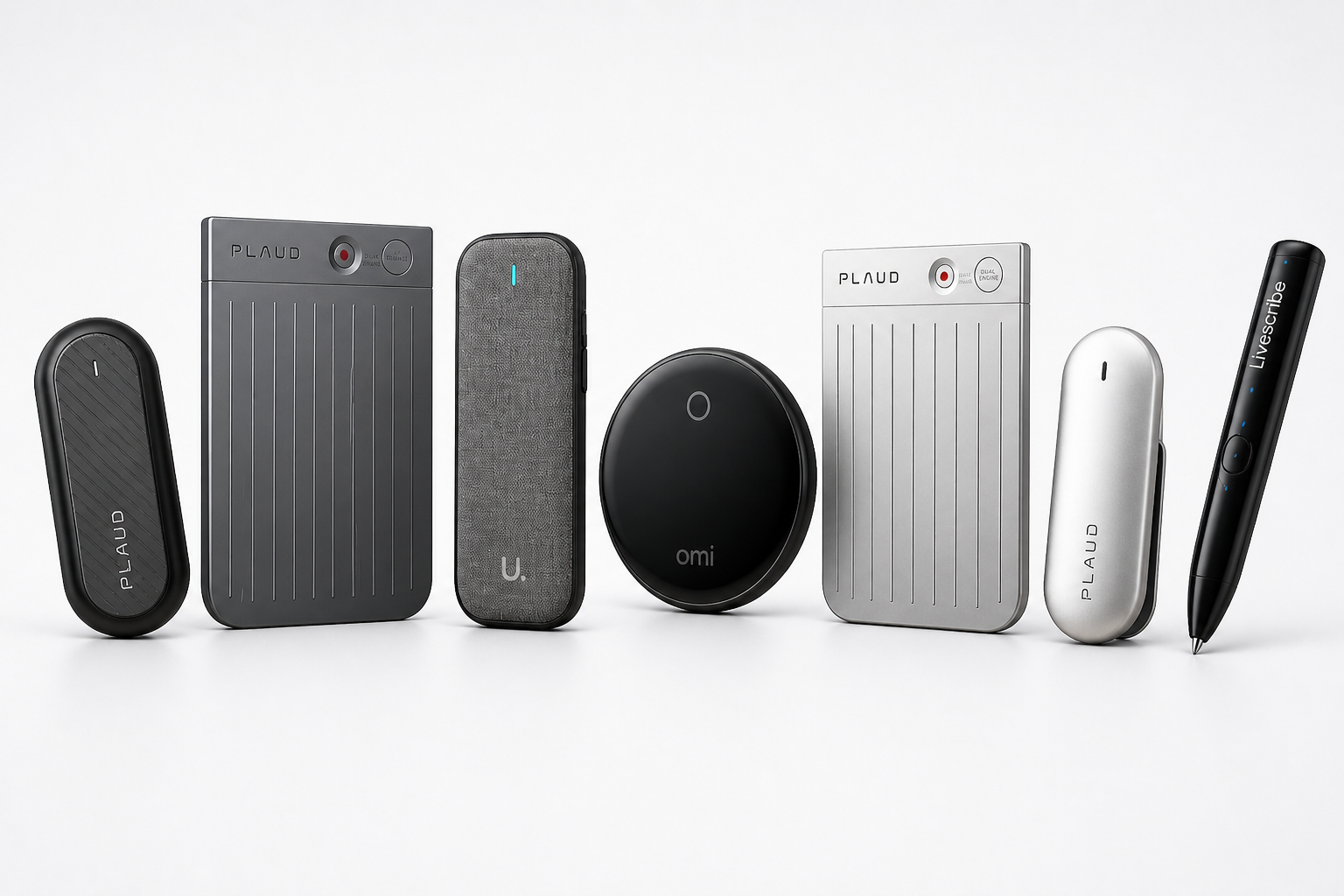
I spent three weeks juggling seven devices — clipping wearables to my collar before client calls, sliding pocket recorders across conference tables, and scribbling with a smart pen during a particularly brutal two-hour product review. My desk looked like a tech reviewer’s yard sale.
Here’s why I bothered: most “best AI note taking devices” lists blur the line between hardware and software, and it’s hard to tell whether you’re reading about a physical device you can carry or just another browser extension. We kept this list focused on purpose-built hardware — pocket recorders, wearable pins, and smart pens — that you can use without opening a laptop.
How We Chose the Best AI Note Taking Devices in 2026
To narrow the field, we evaluated devices on:
Transcription accuracy across accents, background noise, and multi-speaker conversations
Form factor and portability — can you start recording in under three seconds?
Battery life and storage for all-day use without anxiety
Speaker identification — does it know who said what?
App and cloud experience — how easy is it to find, search, and export your notes?
Subscription costs — what do you actually get for free vs. behind a paywall?
Privacy and consent — how is your audio handled, stored, and protected?
We only included devices that are currently shipping and available to buy, with working companion apps and active development.
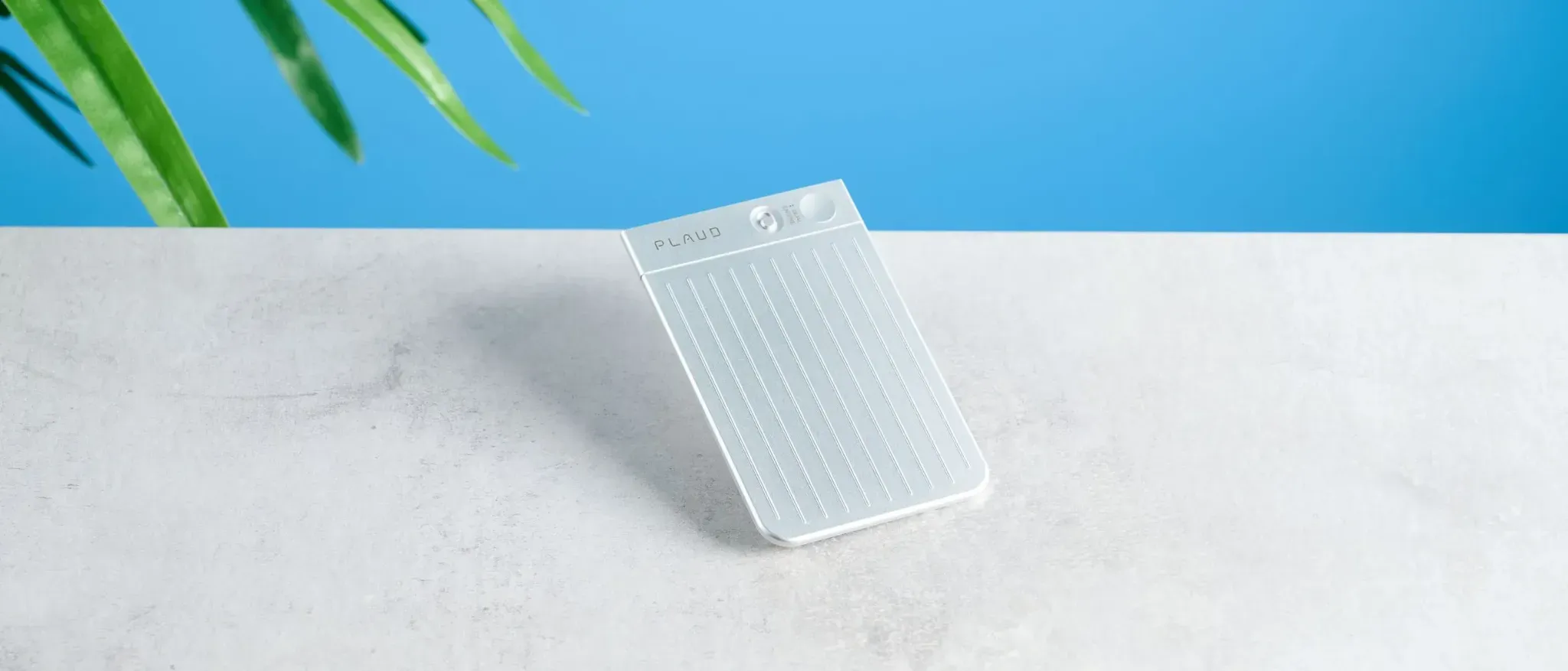
Best overall AI recorder: Plaud Note Pro — four-mic array, 30-hour battery, credit-card-thin design
Best wearable for meetings: Plaud NotePin S — clip it on, press to record, 20-hour battery
Best value recorder: UMEVO Note Plus — 40-hour battery, free unlimited transcription in year one
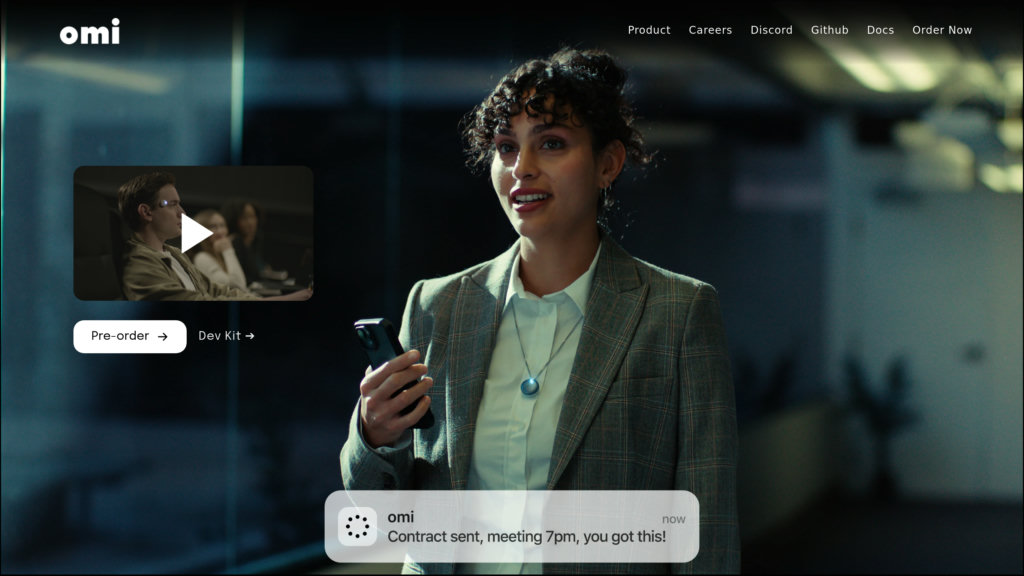
Best open-source wearable: Omi — $89 pendant, no vendor lock-in, strong free plan
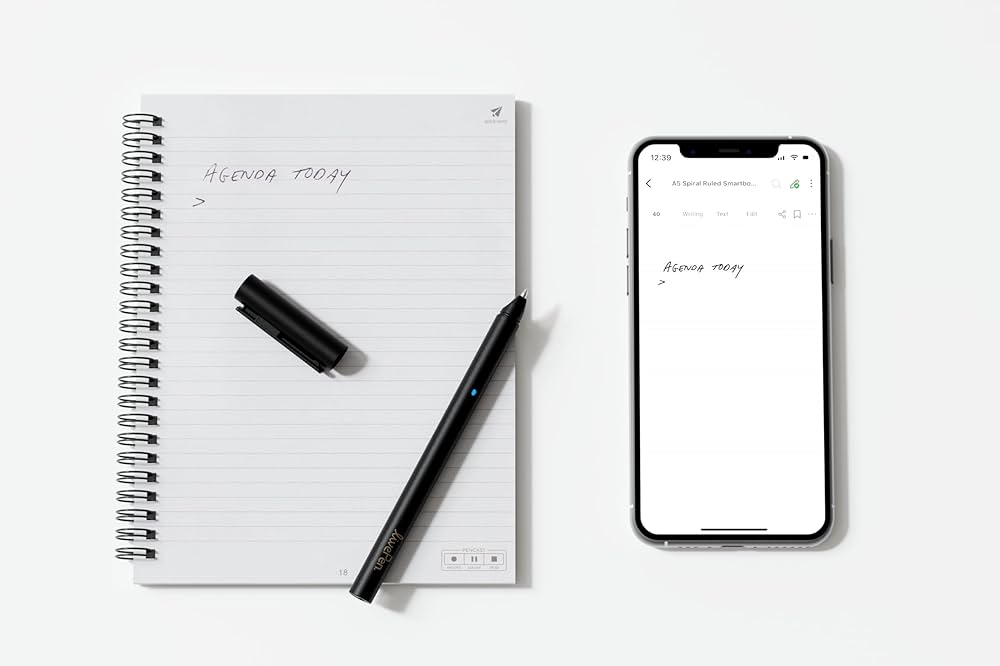
Best smart pen: Livescribe LivePen — real ink on paper with AI handwriting transcription
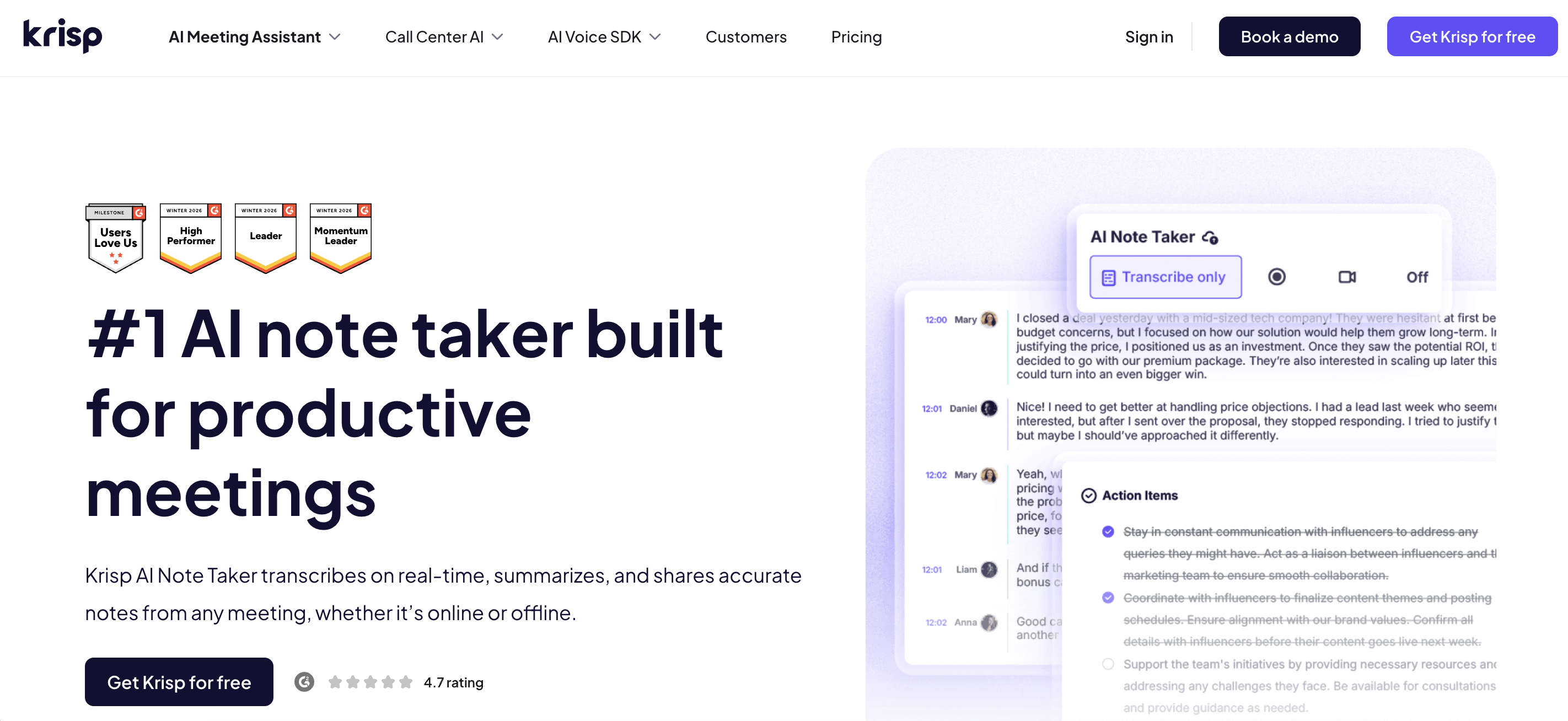
Best software alternative: Krisp — bot-free AI meeting notes with noise cancellation that cleans your transcript at the source, no hardware required
Quick Picks by Use Case
Best for in-person meetings → Plaud Note Pro Four microphones and 16.4-foot voice pickup make it the strongest pocket recorder for conference rooms and group conversations.
Best for hands-free, all-day capture → Plaud NotePin S Clip it to your shirt and forget it. The tactile record button and “Press to Highlight” feature let you mark key moments without pulling out your phone.
Best for lectures and classwork → Livescribe LivePen Write with real ink, then search your handwritten notes as text. Audio syncs to your pen strokes so you can tap a note to hear what was being said when you wrote it.
Best budget wearable → Omi At $89, it’s the cheapest way into wearable AI note taking. Open-source hardware and software, no vendor lock-in, and a generous free tier with 1,200 cloud minutes per month. Supports both live streaming and offline recording.
Best value if you want no subscription pressure → UMEVO Note Plus Free unlimited transcription for the first year, 40-hour battery, and dual recording modes. A strong alternative to Plaud at a lower total cost of ownership.
Best for virtual and hybrid meetings → Krisp AI Note Taker If most of your meetings happen on Zoom, Teams, or Google Meet, you don’t need hardware at all. Krisp captures transcription, AI meeting summaries, and action items — all bot-free, with built-in two sided noise cancellation and accent conversion to ensure every conversation stays clear and productive.
Comparison Table
Device
Form Factor
Battery
Storage
Mics
Languages
Free Tier
Price
Plaud Note Pro
Pocket card
30 hrs
64 GB
4 MEMS + 1 VPU
112
300 min/mo
$189
Plaud NotePin S
Wearable pin
20 hrs
64 GB
2 MEMS
112
300 min/mo
$179
UMEVO Note Plus
Pocket card
40 hrs
64 GB
2 (air + VCS)
140+
Unlimited (yr 1)
$149
Omi
Wearable pendant
10–14 hrs
On-device + phone
2
25+
1,200 cloud min/mo
$89
Plaud Note
Pocket card
30 hrs
64 GB
2 MEMS + 1 VPU
112
300 min/mo
$159
Plaud NotePin
Wearable pin
20 hrs
64 GB
2 MEMS
112
300 min/mo
$159
Livescribe LivePen
Smart pen
7-day standby
20 pages on-pen
—
Handwriting OCR
Free app
~$83*
Krisp (software)
Desktop app
N/A
Cloud
N/A
90+
Free trial available
From $8/mo
Key takeaway: Plaud has the most polished hardware lineup, but UMEVO and Omi are closing the gap on value and openness. Livescribe occupies a niche for handwriting-first users. For anyone whose meetings are primarily virtual, Krisp delivers the same transcription and summarization output without carrying extra hardware.
What Is an AI Note Taking Device?
An AI note taking device is a piece of dedicated hardware — a pocket recorder, a wearable pin, or a smart pen — that captures audio (or handwriting) and uses AI to transcribe, summarize, and organize what was said. You’ll also see them called AI recording devices or smart recorders. Unlike phone apps or laptop-based tools, these devices are built for one job: capturing conversations so you can stay present instead of typing.
Two Main Categories
Voice-first devices (recorders and wearables): These capture audio through built-in microphones, sync to a companion app, and use cloud-based AI to produce transcripts with speaker labels, summaries, and action items. Plaud’s lineup falls here. The advantage is speed — press one button and you’re recording. The trade-off is that you’re adding another gadget to your carry, and most require a paid subscription for full transcription.
Handwriting-first devices (smart pens): These let you write with real ink on paper while digitizing your strokes in real time. Audio recording is secondary — synced through your phone’s microphone rather than the pen itself. Livescribe is the established player. The advantage is that your muscle memory stays intact. The trade-off is that transcription depends on handwriting legibility, and you need special paper.
What Happened to the Limitless Pendant?
If you’ve been researching AI wearables, you’ve probably seen the Limitless Pendant mentioned in older articles. Meta acquired Limitless in December 2025 and immediately stopped selling the pendant to new customers. Existing users kept access, but the device is no longer available for purchase. Many former Limitless users migrated to Omi, which offers a similar form factor with open-source hardware and software.
The Best AI Note Taking Devices in 2026
1) Plaud Note Pro — Best Overall AI Recorder
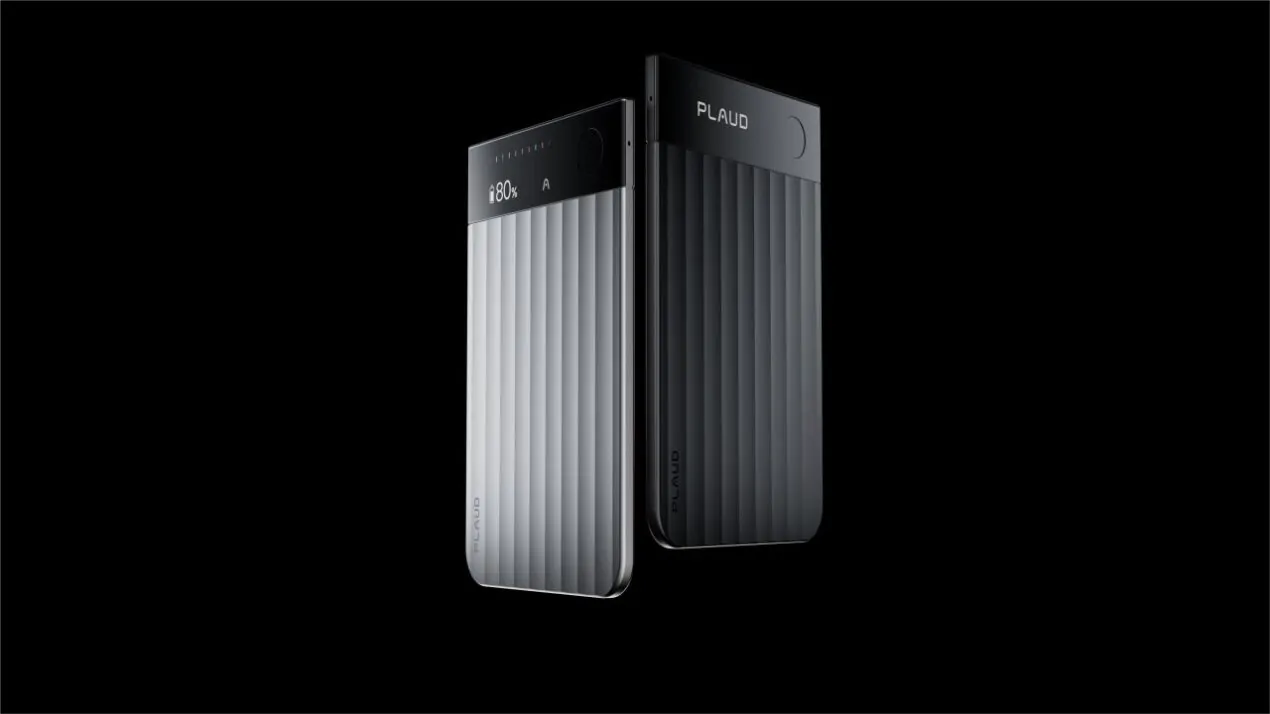
The Plaud Note Pro is the device I’d recommend to anyone who records in-person meetings regularly and wants the highest audio quality in a pocket-sized package. At 0.12 inches thin and just over an ounce, it disappears into a wallet — I tossed mine into my card holder on day one and kept forgetting it was there until I needed it.
The four-mic array (4 MEMS + 1 VPU) picks up voices clearly from across a conference table, and the auto-switching between phone-call mode and in-person mode means you don’t fiddle with settings before hitting record.
Where it impressed me most was in group settings. During a five-person planning session last month, speaker identification was mostly accurate out of the box — though I did need to manually correct one or two labels in the first session before the app learned the voices. The tiny built-in screen is a small touch, but it’s reassuring to glance down and confirm you’re recording.
Key Features
4 MEMS + 1 VPU microphones with 16.4-foot voice pickup
Up to 30 hours (Enhance mode) or 50 hours (Endurance mode) continuous recording, 60-day standby
64 GB onboard storage
Auto-switching between phone call and in-person recording modes
AI transcription in 112 languages with speaker labels
Summaries, mind maps, and 10,000+ output templates
Pros
Best mic array for a pocket recorder — group conversations sound clear
Ultra-thin design fits in a wallet or card slot
30-hour battery means multi-day use between charges
Built-in display shows recording status at a glance
Cons
300 free minutes per month goes fast if you record daily — most heavy users will need the Pro ($99.99/yr) or Unlimited ($239.99/yr) plan
Transcription happens in the cloud, not on-device, so you need connectivity to process recordings
Pricing: $189 for the device. Free Starter plan (300 min/mo). Pro plan: $99.99/year. Unlimited: $239.99/year.
Verdict: The Plaud Note Pro is the strongest all-around AI note taking device you can buy in 2026. If you record meetings more than twice a week, the mic quality and battery life justify the price.
2) Plaud NotePin S — Best Wearable for Meetings
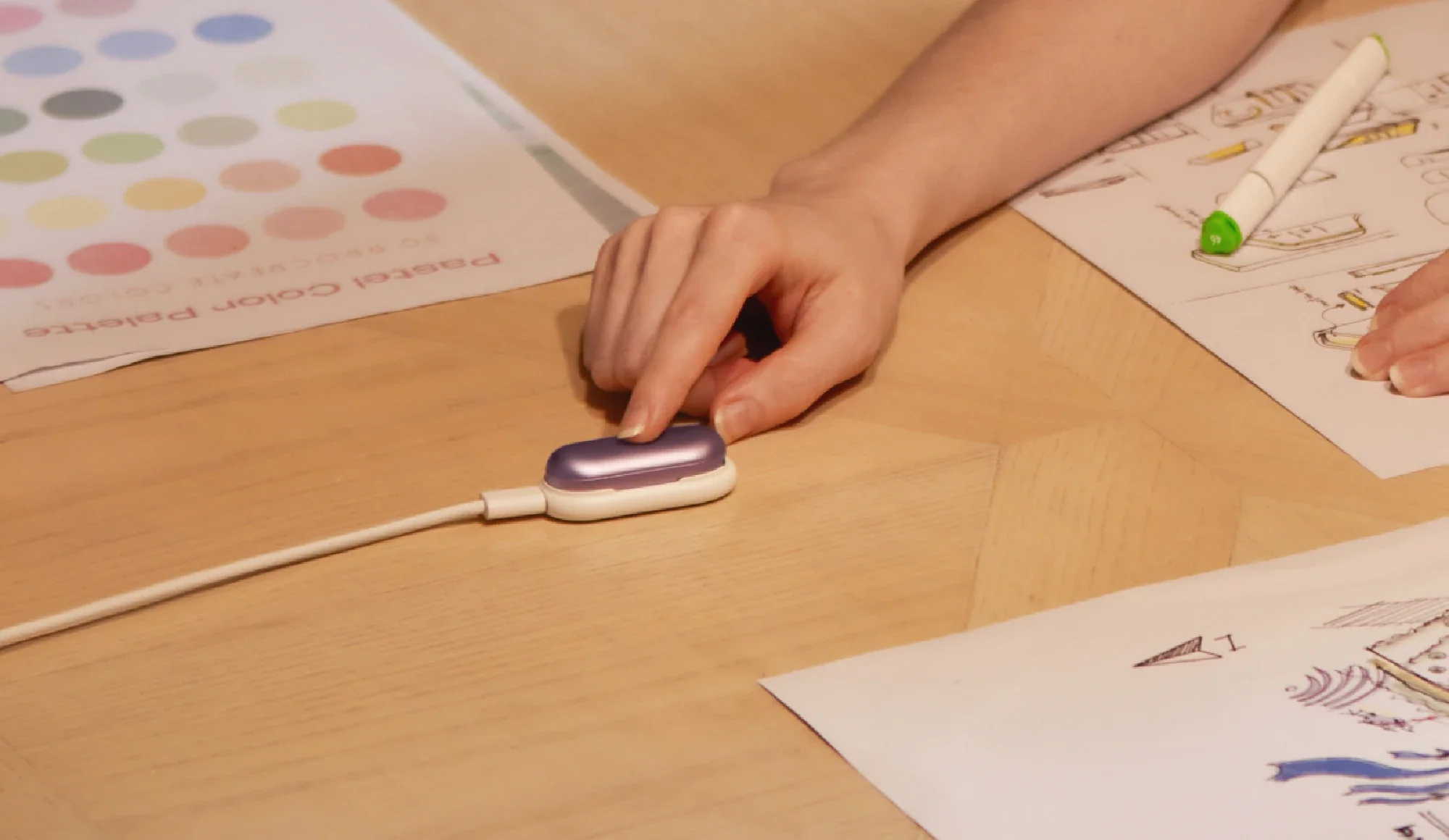
The NotePin S is Plaud’s latest wearable, and the upgrade that matters most over the original NotePin is the tactile record button. With the original, the pressure-sensitive surface sometimes left me wondering whether I’d actually started recording — I’d glance at my phone mid-meeting just to make sure, which defeated the point of hands-free. The NotePin S removes that doubt. You press a physical button, feel the click, and you’re rolling.
The “Press to Highlight” feature is useful in long meetings. When someone says something important, a quick press bookmarks that moment in the transcript so you can jump straight to it later instead of scrolling through 45 minutes of text. At 0.61 oz with four wearing options (magnetic pin, clip, lanyard, wristband), it stays out of the way. I wore it clipped to a shirt collar for a full day of back-to-back meetings and forgot it was there by the third call.
Key Features
Tactile record button with Press to Highlight
20-hour continuous recording
64 GB storage
AI transcription in 112 languages with speaker labels
Four wearable accessories included
ISO 27001, GDPR, SOC 2, and HIPAA compliant
Pros
Physical button is a meaningful upgrade — no more guessing whether you’re recording
Press to Highlight saves time in post-meeting review
Two-mic setup captures less spatial detail than the Note Pro’s four-mic array
Some users report occasional sync delays between the device and the companion app
Not optimized for virtual calls — it’s primarily an in-person device
Pricing: $179 for the device. Same subscription tiers as other Plaud devices (300 free min/mo, Pro at $99.99/yr, Unlimited at $239.99/yr).
Verdict: The NotePin S is the best wearable AI note taking device available right now. If you need hands-free recording for in-person conversations — client meetings, interviews, brainstorming sessions — this is the one to get.
3) UMEVO Note Plus — Best Value AI Recorder
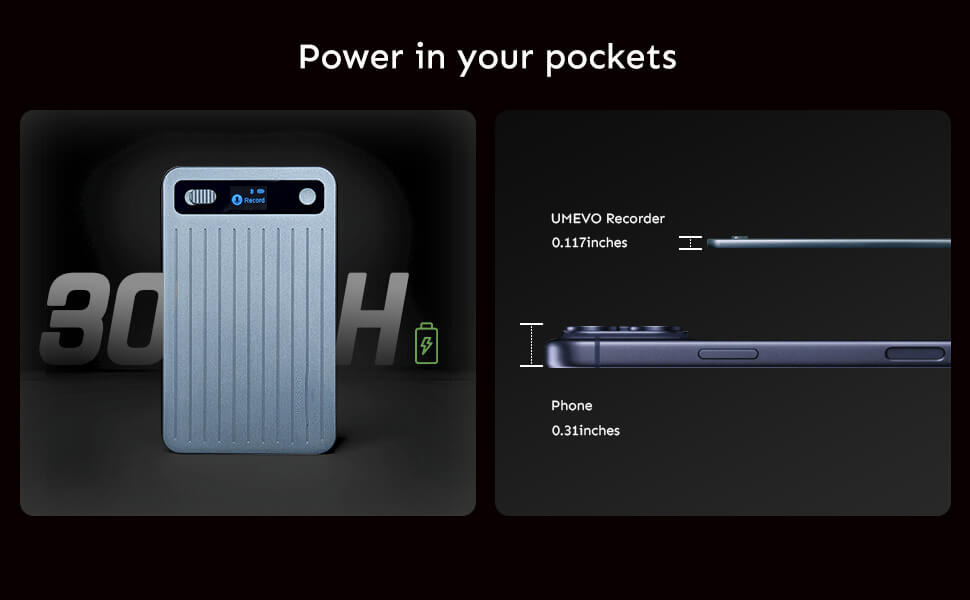
The UMEVO Note Plus is the device I’d point budget-conscious buyers toward — not because it feels cheap, but because the total cost of ownership undercuts Plaud by a wide margin. The hardware itself is $149, and it ships with free unlimited transcription for the entire first year. After that, you still get 400 free minutes per month, which is more generous than Plaud’s 300-minute Starter plan.
What sets it apart technically is the dual recording mode. A physical switch toggles between standard air-conduction (for in-person meetings) and a vibration-conduction sensor designed to capture phone calls directly from the phone’s chassis. In testing, the phone-call mode picked up both sides of a conversation more clearly than just laying a Plaud device next to a phone on speaker. Battery life is the other headline: 40 hours of continuous recording is the longest on this list.
I ran it through a full week of client calls and a couple of in-person syncs. The air-conduction mic held up well in a quiet conference room, though it didn’t separate overlapping voices as cleanly as the Plaud Note Pro did. For the price, though, it’s hard to complain.
Key Features
64 GB onboard storage
40-hour continuous recording
Dual mode: air-conduction mic + vibration-conduction sensor for phone calls
AI transcription in 140+ languages
Free unlimited transcription for the first year, then 400 min/mo free
Pros
Best first-year value — unlimited transcription included with the device
40-hour battery is the longest of any pocket recorder here
Dual recording mode handles in-person and phone calls well
No subscription required for moderate use after year one
Cons
Newer brand — the app and ecosystem are less mature than Plaud’s
Community and review coverage is still limited compared to Plaud
Pricing: $149 for the device. Unlimited transcription free for year one. After that: 400 free min/mo, or paid plans for heavier use.
Verdict: If subscription fatigue is your main concern, the UMEVO Note Plus gives you the most transcription for the least money. The hardware is solid — it just doesn’t have the brand polish or app ecosystem that Plaud has built over the past two years.
4) Omi — Best Open-Source Wearable
Omi is the wild card on this list. At $89, it’s the cheapest wearable AI recording device available — and it’s fully open-source, both hardware and software. That matters because it means no vendor lock-in: if Omi the company disappeared tomorrow, the community could keep the firmware and app running.
That’s not a hypothetical worry, either. After Meta acquired Limitless (the other major AI pendant) in late 2025 and immediately pulled it from sale, a wave of users migrated to Omi specifically because of this openness. The Omi Discord gained thousands of members almost overnight — people who’d learned the hard way what happens when a hardware company gets acquired and your device becomes a paperweight.
The device is tiny — just 2.5 cm in diameter — and supports both live streaming (via Bluetooth to your phone) and offline recording for when your phone isn’t nearby. Two built-in mics handle voice capture with speaker recognition, and battery runs 10 to 14 hours depending on use. That’s shorter than Plaud’s wearables but still covers a full workday. It works with iOS, Android, Mac, and any web browser.
Key Features
Open-source hardware and software (GitHub available)
2 microphones with speaker recognition and noise reduction
10-14 hour battery life (150 mAh)
AI transcription in 25+ languages (single, multi-speaker, and translation)
Both live streaming and offline recording modes
Bluetooth 5.1 + Wi-Fi (2.4/5 GHz)
SOC 2 and HIPAA compliant
1,000+ apps via Omi App Store
Pros
Lowest price for a wearable AI recording device ($89)
Active community (9,000+ Discord members), especially after Limitless users migrated over
Works across iOS, Android, Mac, and web
Cons
Shorter battery life than Plaud wearables (10-14 hrs vs. 20 hrs)
Fewer languages than Plaud (25+ vs. 112)
Currently out of stock on omi.me (pre-order available)
Smaller device means audio pickup range is more limited than pocket recorders
Pricing: $89 for the device. Includes unlimited free on-phone transcription + 1,200 free cloud minutes per month. Omi Unlimited (unlimited cloud transcription) starts at $16/month.
Verdict: The best pick for tinkerers and anyone wary of being locked into a single vendor’s ecosystem. The free tier is generous, and the open-source model means your data and workflow aren’t held hostage.
5) Plaud Note — Best Budget Plaud Recorder
The original Plaud Note is still a solid choice if you want the core AI recording experience without paying for the Pro’s upgraded mic array. It shares the same credit-card form factor and 64 GB of storage, and uses 2 MEMS + 1 VPU microphones with a 9.8-foot recording range (compared to the Pro’s 16.4 feet).
In a quiet room, the transcription quality is nearly identical to the Pro. The gap shows up in noisier environments or larger group settings, where the Pro’s extra mics and extended range pull ahead on speaker separation. I tested both side by side in a six-person meeting — the Pro nailed four out of six speakers, while the Note confused two of them until I corrected the labels manually.
For someone who primarily records one-on-one conversations — interviews, coaching calls, quick voice memos — the original Note gets the job done at a lower price.
Key Features
2 MEMS + 1 VPU microphones with 9.8-foot recording range
30-hour continuous recording, 60-day standby
64 GB onboard storage
AI transcription in 112 languages
Same app experience and AI features as the Pro
Pros
$30 less than the Note Pro with the same core AI capabilities
Slim, pocketable design — same dimensions and weight as the Pro
Same 64 GB storage, 30-hour battery, and cloud AI processing
Cons
Shorter recording range (9.8 ft vs. 16.4 ft) means weaker performance in larger rooms
No built-in AMOLED display
Still requires a subscription for heavy use
Pricing: $159 for the device. Same subscription tiers (300 free min/mo, Pro at $99.99/yr, Unlimited at $239.99/yr).
Verdict: The best entry point into dedicated AI recording hardware. If your recordings are mostly one-on-one or in quiet spaces, you won’t miss the Pro’s extra microphones.
6) Plaud NotePin — Best for Hands-Free Capture
The original NotePin pioneered the wearable AI recorder category and still holds up well. At 0.59 oz, it’s the lightest device on this list. The button-free, pressure-sensitive design is elegant in theory — but in practice, I found the NotePin S’s tactile feedback more reliable. I lost the first few seconds of a client call once because my squeeze didn’t register. That said, if you prefer a minimal, button-free aesthetic and you’re comfortable with the gesture, the NotePin works.
Speaker identification is a standout here. Once you tag a few voices in the app, it consistently labels who said what — which is a lifesaver for meeting minutes and action-item extraction.
Key Features
Pressure-sensitive, button-free recording control
20-hour continuous recording, 40-day standby
64 GB storage
Speaker identification with assignable names
Multiple wearing options
Pros
Lightest wearable AI recorder available
Strong speaker identification after initial voice tagging
20-hour battery and 40-day standby
Cons
Pressure-sensitive control can feel ambiguous — did I start recording?
Not designed for virtual calls (no direct Zoom/Teams/Meet integration)
Sync issues between device and app reported by some users
Pricing: $159 for the device. Same Plaud subscription tiers (300 free min/mo, Pro at $99.99/yr, Unlimited at $239.99/yr).
Verdict: A capable wearable recorder, but the NotePin S is worth the $20 premium for the tactile button and Press to Highlight.
7) Livescribe LivePen — Best Smart Pen for Students
The Livescribe LivePen is a completely different breed from the Plaud lineup. Instead of recording audio through built-in microphones, it digitizes your handwritten notes in real time and uses your phone’s mic for audio capture. If you learn by writing — not just listening — this is the only device on this list that preserves that workflow.
What surprised me was the OCR accuracy. Even with my messy handwriting, the AI transcription caught most words correctly, and the math-to-LaTeX feature is a real time-saver for STEM students. The killer feature, though, is audio-ink sync: tap any word in your notebook and the app plays back exactly what was being said at the moment you wrote it. I tried this during a recorded lecture playback and it felt like having a rewind button for my memory.
The trade-off is that it requires Livescribe’s special dot-pattern paper, and audio recording runs through your phone rather than the pen itself, so you need your phone nearby and unlocked.
Key Features
Writes with real ink while digitizing strokes via Bluetooth
AI handwriting-to-text transcription (OCR)
Audio synced to pen strokes — tap a word to hear what was said when you wrote it
Math-to-LaTeX transcription
Free companion app (iOS, Android, web)
7-14 day standby battery
Pros
Preserves the handwriting experience while adding digital search and sync
Audio-ink sync is useful for reviewing notes
No subscription required — the app is free
Affordable entry point at ~$83
Cons
Requires special Livescribe paper (ongoing cost)
Audio recording relies on your phone’s microphone, not the pen
No speaker identification or AI summaries — it’s a note capture tool, not a meeting assistant
Not practical for meetings where you need to stay hands-free
Pricing: ~$83 for the pen (when in stock). Livescribe dot-pattern notebooks sold separately (~$8-$30). No subscription.
Availability note: As of early 2026, the LivePen A5 Bundle is listed as sold out on Livescribe’s official US store. Check the site for restocks or look for authorized resellers.
Verdict: The best option for students and anyone who thinks better with a pen in hand — if you can get one. Not a meeting recorder — a note-taking enhancer.
AI Note Taking Device vs. App: Which Approach Is Better?
This is the question worth answering before you spend money on hardware: do you actually need a physical device, or would software do the job?
Here’s a scenario that might sound familiar. You buy a slick AI recording device, use it religiously for in-person meetings, and then realize that 80% of your week is still Zoom calls. The recorder sits on your desk, uncharged, while you scramble through your meeting platform’s built-in transcript to find what your manager said about the deadline change.
Dedicated devices shine when pulling out a laptop or phone feels awkward or disruptive — in-person client meetings, interviews, hallway conversations, classrooms. They start recording with a single button press, and they don’t rely on a meeting platform to work.
But the reality is: most professionals spend the majority of their meeting time on Zoom, Teams, or Google Meet. If that’s you, a device isn’t recording those calls — your computer is. And that’s where software has a clear edge.
Choosing software over hardware is only half the decision. AI note-taking apps vary a lot in how well they capture conversations, handle different meeting environments, and turn transcripts into something genuinely useful. This breakdown of what actually makes an AI note taker good covers the criteria worth looking at before choosing one.
Krisp, for example, captures AI meeting notes and transcription directly from your virtual meetings — no bot joining the call, no hardware to charge, and plans starting at $8/month. Its noise cancellation is especially relevant here: if you’re recording in a noisy environment, Krisp cleans the audio at the source, which means your transcript is more accurate from the start. That’s a problem hardware microphones alone can’t solve.
Rule of thumb: Get a device if most of your important conversations happen in person. Stick with software if most happen on a screen. If you do both, a device plus Krisp covering your virtual calls is a strong combination.
How to Choose the Right AI Note Taking Device
Step 1: Identify Your Primary Use Case
Conference room meetings → You want a multi-mic pocket recorder (Plaud Note Pro or UMEVO Note Plus)
Walking meetings, interviews, all-day capture → You want a wearable (Plaud NotePin S or Omi)
Lectures, study sessions, handwritten notes → You want a smart pen (Livescribe LivePen)
Virtual meetings on Zoom/Teams/Meet → You want software, not hardware (Krisp)
Step 2: Set Your Budget (Device + Ongoing Costs)
Don’t just compare device prices — factor in subscriptions. Every Plaud device comes with 300 free transcription minutes per month. If you record more than five hours monthly, you’ll need the Pro plan ($99.99/year) or Unlimited ($239.99/year). Livescribe has no subscription but requires ongoing notebook purchases. Krisp offers a free trial with unlimited transcription, and paid plans start at $8/month (billed annually).
Step 3: Check Your Recording Environment
If your meetings happen in noisy spaces, microphone quality matters more than anything else. The Plaud Note Pro’s four-mic array handles noise better than two-mic devices. For virtual meetings in noisy spaces, Krisp’s noise cancellation is hard to beat.
A Note on Consent and Privacy
These devices record real conversations, and that carries responsibility. Before using any AI recorder:
Know your local laws. Many jurisdictions require all-party consent for recording. Some require only one-party consent. Check before you record.
Tell people you’re recording. Even where one-party consent is legal, disclosing a recording builds trust — especially in professional settings. I make it a habit to say “I’m recording this so I don’t miss anything” at the start of every meeting. Nobody has ever objected.
Understand where your audio goes. Plaud processes transcription in the cloud (they hold ISO 27001, SOC 2, GDPR, and HIPAA certifications). UMEVO also uses cloud processing. Omi offers both cloud and local on-phone processing, and holds SOC 2 and HIPAA certifications with AES-256 encryption at rest. Livescribe processes handwriting via its cloud OCR. Krisp processes noise cancellation on-device — audio never leaves your machine for that step.
Privacy shouldn’t be an afterthought when you’re carrying a device that records everything around you.
Conclusion
The AI note taking device market in 2026 has grown past the one-brand era. Plaud still offers the most polished hardware-plus-AI experience, but UMEVO is competing hard on value and Omi has built a loyal following with its open-source approach — especially among former Limitless Pendant users who learned what vendor lock-in feels like the hard way.
If you need a physical device for in-person recording, the Plaud Note Pro is the clear winner for audio quality, the Plaud NotePin S is the best wearable, and the UMEVO Note Plus is the best value. Students who prefer handwriting should look at the Livescribe LivePen.
That said, most meeting professionals will get more value from software than hardware. If your meetings happen on Zoom, Teams, or Google Meet, Krisp handles transcription, summaries, and recording without a bot, without extra hardware, and with noise cancellation that makes every transcript more accurate.
As the team behind Krisp, we’re not a neutral party — but the hardware comparisons above are based on real testing, and the devices where dedicated hardware leads are noted. For most people, the right answer is software for virtual meetings and a device for in-person ones.
Have questions or want to suggest a device we should test? Drop us a line — we update this post as new hardware ships.
Best AI Note Taking Devices FAQs
The Plaud Note Pro is the best overall AI note taking device in 2026 for most users. Its four-microphone array, 30-hour battery, and ultra-thin design make it the most capable pocket recorder available. For wearable use, the Plaud NotePin S is the top choice. If your meetings are primarily virtual, Krisp delivers AI notes and transcription without requiring any hardware.
It depends on context. Devices are more effective for in-person meetings, interviews, and lectures where using a laptop would be intrusive. Apps and software tools like Krisp are better suited for virtual meetings on Zoom, Teams, and Google Meet, and eliminate the need for charging or carrying additional hardware.
For lecture recording, the Plaud Note Pro or Plaud Note provides strong audio capture and transcription. For handwriting-based workflows, the Livescribe LivePen enables real ink writing while generating searchable digital notes with synchronized audio.
Most devices operate on a subscription model. Plaud devices include 300 free transcription minutes per month, with paid tiers such as Pro ($99.99/year) and Unlimited ($239.99/year). The Livescribe LivePen does not require a subscription, as its companion app is free. Krisp offers a free trial with full features, followed by paid plans starting at approximately $8/month (annual billing).
Yes. Plaud pocket recorders, including the Plaud Note Pro and Plaud Note, support phone call recording and can switch between call and in-person modes. Wearable devices like the Plaud NotePin S are primarily designed for in-person recording and do not directly integrate with calling platforms.
The Omi pendant, priced at around $89, is the most affordable dedicated AI note taking device in 2026. It supports live streaming, offline recording, and includes an unlimited on-device transcription plan plus 1,200 free cloud minutes per month. The Livescribe LivePen is similarly priced (~$83), though it functions as a smart pen rather than a voice recorder.
Legality depends on jurisdiction. In many regions, including most of Europe, consent from all participants is required before recording. Disclosure is essential, particularly in professional contexts. Always verify local regulations before using any recording device.