Most “best meeting productivity tools” lists read like a phone book: 20-plus apps dumped in a row, half of them discontinued, none tied to an actual workflow. That doesn’t help you run a better meeting. It just helps you scroll.
We took a different approach and organized this list by where each tool actually helps: before, during, and after the meeting. That’s how meetings really fall apart. You lose ten minutes scheduling, another five fumbling with audio, and then the decisions evaporate because nobody wrote them down. Fix each stage and the whole thing gets shorter and sharper.
This guide is for anyone who lives in meetings: remote and hybrid teams, managers running back-to-back syncs, founders, and client-facing folks who can’t afford to drop a detail. Every tool here is current in 2026, has a free plan or trial, and earns its spot for a specific job.
Below, we break down the best meeting productivity tools by workflow stage, so you can choose the right tools to make every meeting easier to plan, run, and follow up on.
Why meetings drain productivity (and what tools can fix)
Meetings take up more of the workweek than most teams realize. According to Zoom, 52% of fully remote leaders spend three or more hours a day in virtual meetings. But the problem is not just how many meetings teams have. It is the time lost around them: scheduling, preparation, technical issues, unclear notes, and follow-ups that never turn into action.
When you look at where meeting time leaks, the problem is rarely the conversation alone. It is the workflow surrounding it. Someone spends too long finding a slot. The call starts late because of audio problems or access issues. Then the meeting ends, but the decisions are scattered across memory, chat messages, and half-written notes. By the next week, the same topic is back on the agenda.
That’s why we split meeting productivity into three stages:
- Before: schedule fast and walk in prepared.
- During: run a clean call and capture everything without doing it by hand.
- After: turn the conversation into shared notes and tracked action items.
The right meeting productivity stack does not mean adding more tools to an already crowded workflow. It means choosing one strong tool for each stage, so your team can spend less time managing meetings and more time moving work forward. Here’s how we picked them.
How we chose these tools
We evaluated dozens of meeting apps and kept only the ones that pull real weight in a daily workflow. Our criteria:
- Solves a real stage of the meeting: scheduling, running, capturing, or following up.
- Has a free plan or free trial, so you can test before paying.
- Works with the big platforms: Zoom, Google Meet, and Microsoft Teams.
- Still maintained in 2026, with no dead or quietly sunset tools.
- Honest about trade-offs, so every pick gets a real limitation, not a sales pitch.
We scored each tool on time saved, ease of adoption, integrations, and privacy. Tools that only existed to pad a list didn’t make it.
TL;DR: quick picks
- Best for in-meeting AI notes (and our top pick): Krisp. Captures notes, transcripts, and summaries without a bot joining the call, plus noise cancellation that holds up in a loud room.
- Best for scheduling: Calendly. Kills the back-and-forth of finding a time.
- Best for agendas & recurring meetings: Fellow. Shared agendas that keep syncs on track.
- Best for video conferencing: Zoom. Still the most reliable for large and external calls.
- Best free AI summaries: Fathom. Solid automatic recaps at no cost.
- Best for follow-through: Asana. Turns decisions into assigned, tracked tasks.
You don’t need all eleven. Pick one per stage and you’re set.
Meeting productivity tools at a glance
Here’s the full lineup, organized by meeting stage, including what each tool is best for and where its paid pricing begins. Most also offer a free plan or trial.
| Tool |
Stage |
Best for |
Free plan or trial |
Starting paid price |
| Calendly |
Before |
Scheduling without back-and-forth |
Yes |
$10/seat/mo |
| Fellow |
Before |
Agendas and recurring meetings |
Yes |
$7/user/mo |
| Zoom |
During |
Reliable video conferencing |
Yes, with 40-minute meetings |
From $14.16/user/mo |
| Krisp |
During |
Bot-free AI notes and noise cancellation |
7-day free trial |
$8/user/mo annually, or $16 monthly |
| Otter.ai |
During |
Searchable transcripts |
Yes, 300 min/mo |
$8.33/user/mo |
| Fathom |
During |
Free AI summaries |
Yes |
$16/user/mo for Premium; Team starts at $15/user/mo with a 2-user minimum |
| Slido |
During |
Polls, Q&A, and engagement |
Yes |
$17.50/mo |
| Miro |
During |
Whiteboarding and workshops |
Yes |
$8/member/mo |
| Notion |
After |
Sharing and storing notes |
Yes |
$10/seat/mo |
| Asana |
After |
Tracking action items |
Yes |
$10.99/user/mo |
| Slack |
After |
Async follow-up |
Yes |
$7.25/user/mo |
The big takeaway: most teams already have a conferencing tool and a task manager. The stage that’s usually missing a real solution is during the meeting, capturing the conversation. That’s exactly where Krisp lives, and why it’s our top pick.
Before the meeting: scheduling & prep
Meeting waste often starts before anyone joins the call. Microsoft’s Work Trend Index found that inefficient meetings are the top productivity disruptor, with unclear goals and too many meetings also ranking among the biggest blockers. That matches the real workflow problem: teams spend too long finding a slot, accept meetings without enough context, and walk in without a clear agenda.
The tools in this section fix the pre-meeting layer. They help teams schedule faster, prepare with more context, and make sure every meeting has a clear reason to be on the calendar.
1) Calendly: best for eliminating back-and-forth scheduling
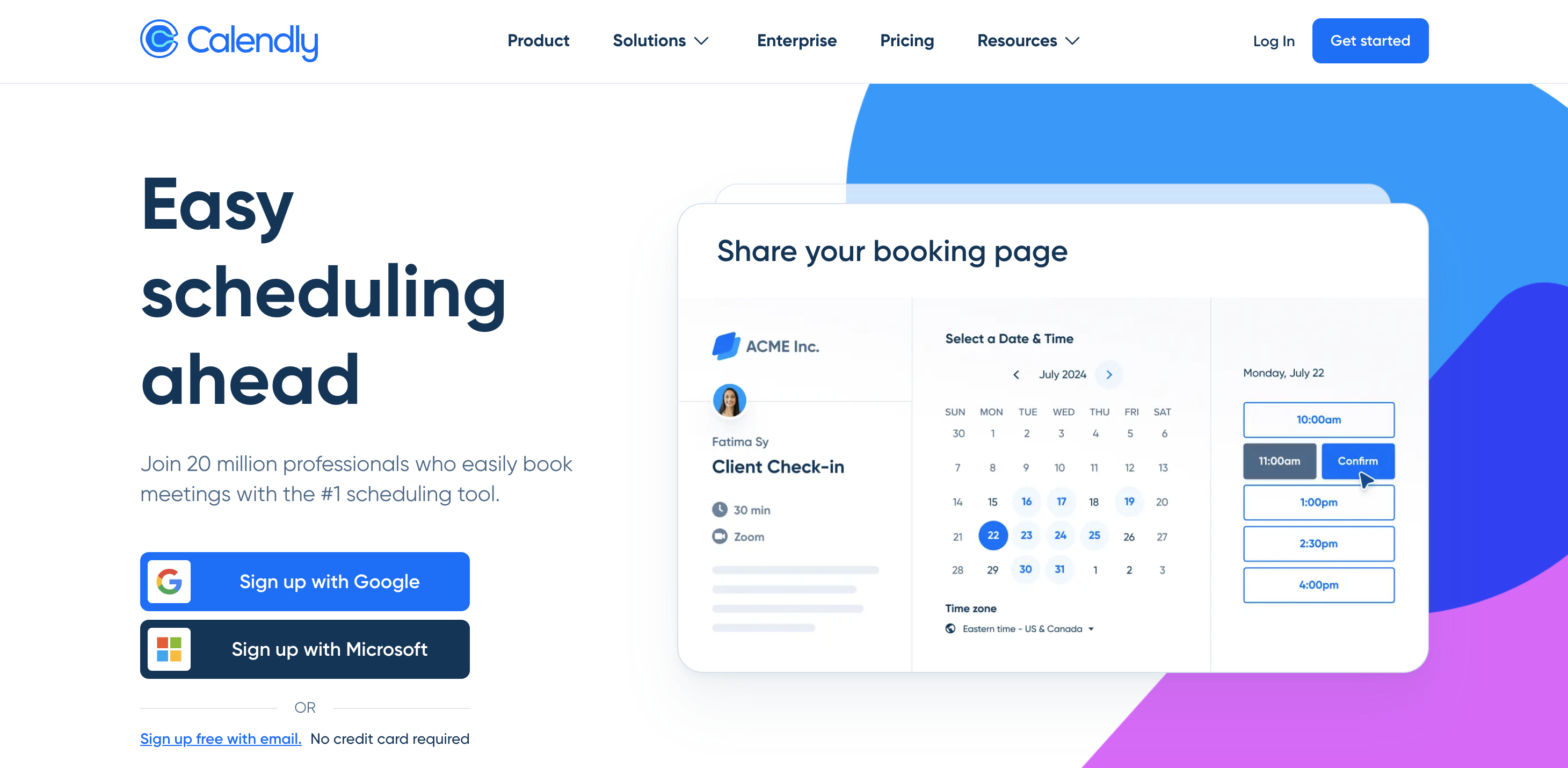
The first time I shared a Calendly link instead of trading six emails about “does Tuesday work,” the whole thing was booked in under a minute. It even auto-adjusted for the other person’s time zone, which is usually where I trip up. That’s the appeal. You set your availability once, drop a link, and people grab a slot that’s already free on your calendar.
Key features
- Share-your-availability booking links
- Two-way sync with Google, Outlook, and Apple calendars
- Automated reminders and follow-ups
- Time-zone detection
- Group and round-robin scheduling
Pros
✅ Removes scheduling email chains
✅ Clean, fast setup
✅ Works for sales calls, interviews, and internal syncs
Cons
❌ The most useful features (multiple event types, integrations) sit behind paid tiers
💰 Pricing: Free plan for one event type; paid plans start around $10/seat/mo
📌 Verdict: If scheduling is your biggest time sink, start here.
2) Fellow: best for agendas and recurring meetings
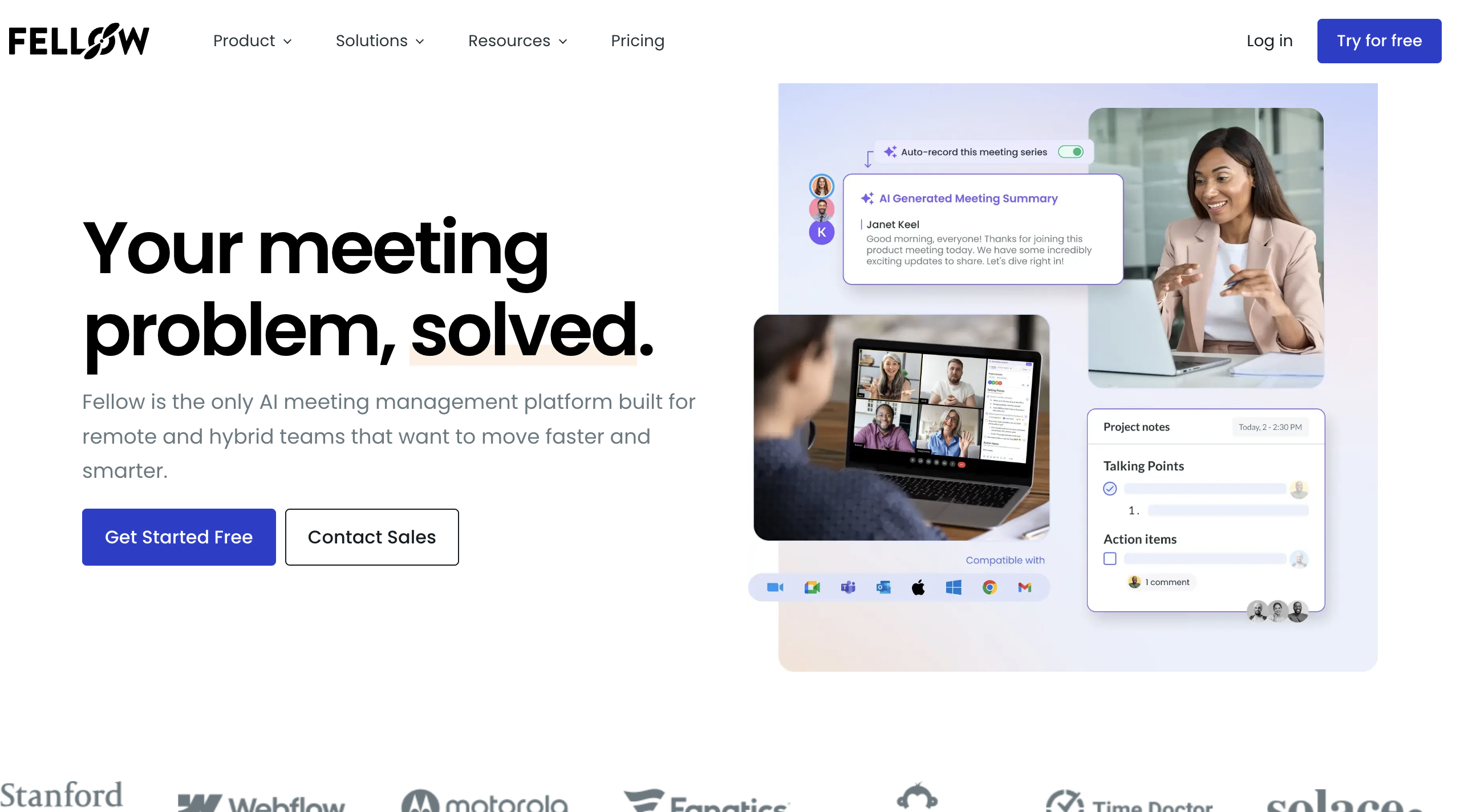
What won me over with Fellow was the recurring 1:1. Last week’s unfinished talking points were just there at the top of this week’s agenda, so nothing slipped. It’s built for the meetings you have over and over: shared agendas both sides can add to, talking points, and action items that carry forward.
Key features
- Collaborative agendas for 1:1s and team meetings
- Talking points and templates
- Action items that carry across recurring meetings
- Calendar and video-tool integrations
Pros
✅ Keeps recurring meetings focused
✅ Both sides contribute to the agenda
✅ Good prompts for better 1:1s
Cons
❌ Most valuable only when the whole team adopts it
💰 Pricing: Free plan available; paid plans start around $7/user/mo
📌 Verdict: Best for managers running regular syncs. (If you want a dedicated agenda-and-minutes platform, we cover those in our guide to meeting management software.
During the meeting: run it, capture it, engage
This is where meetings are won or lost. You either capture the conversation cleanly and keep everyone present, or you spend the call half-listening while you scribble notes and lose the thread anyway. These tools handle the three during-meeting jobs: conferencing, capture, and engagement.
3) Zoom: best for reliable video conferencing
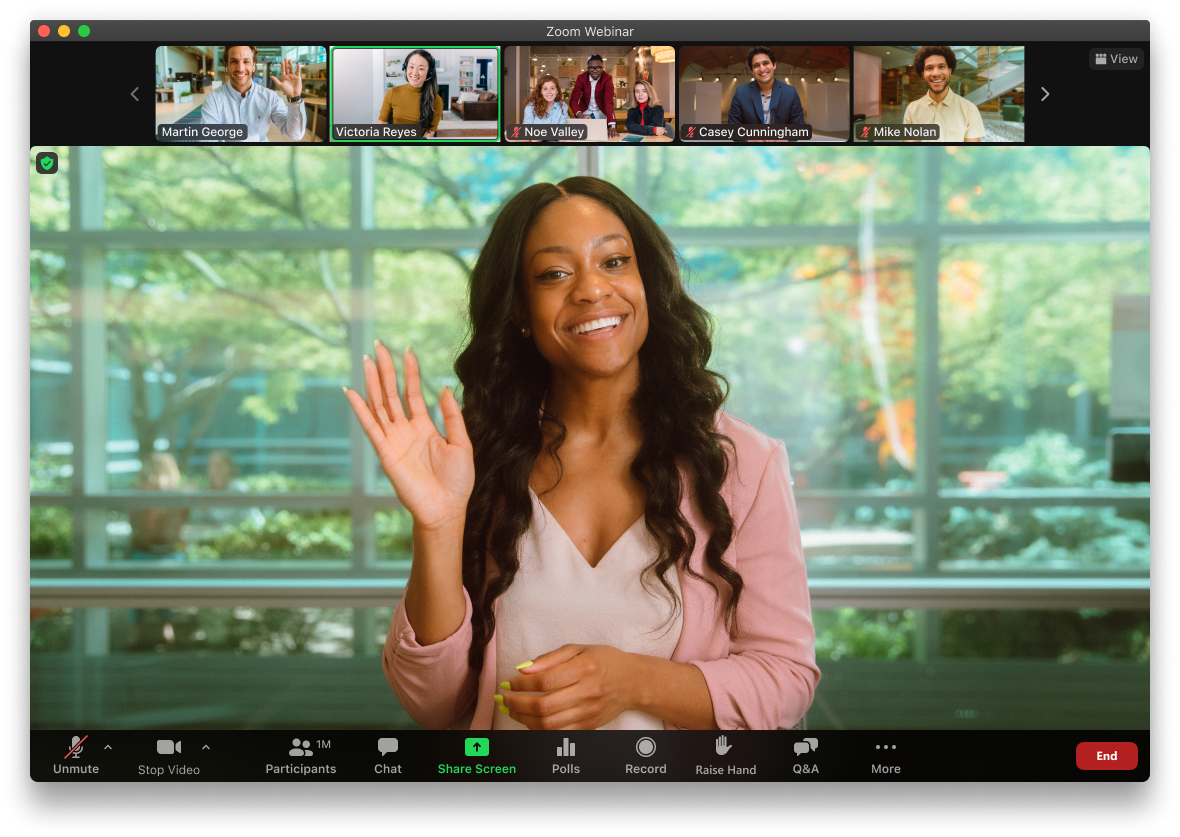
Zoom is the one nobody has to be taught to use, which counts for a lot when you’ve got an external client on the line. In testing it’s still the most dependable for larger calls: HD video, screen share, breakout rooms, and recording all just work. Google Meet and Microsoft Teams are the obvious alternatives if you already live in Google Workspace or Microsoft 365.
Key features
- HD video and audio for up to 100 participants on the free plan
- Screen sharing, breakout rooms, and whiteboard
- Cloud recording (paid)
- A huge integration ecosystem
Pros
✅ Reliable on shaky connections
✅ Everyone already knows how to use it
✅ Deep integrations with the rest of this list
Cons
❌ The 40-minute cap on free group meetings ends a lot of calls early
❌ Meeting quality still hinges on your audio; background noise and echo are on you
That last point is the natural handoff. A reliable platform won’t fix a noisy room or a transcript full of “[inaudible].” That’s where the next tool comes in.
💰 Pricing: Free with a 40-minute group limit; Pro starts around $14.16/user/mo
📌 Verdict: The safe default for external and large meetings.
4) Krisp: best for bot-free AI notes and noise-free calls
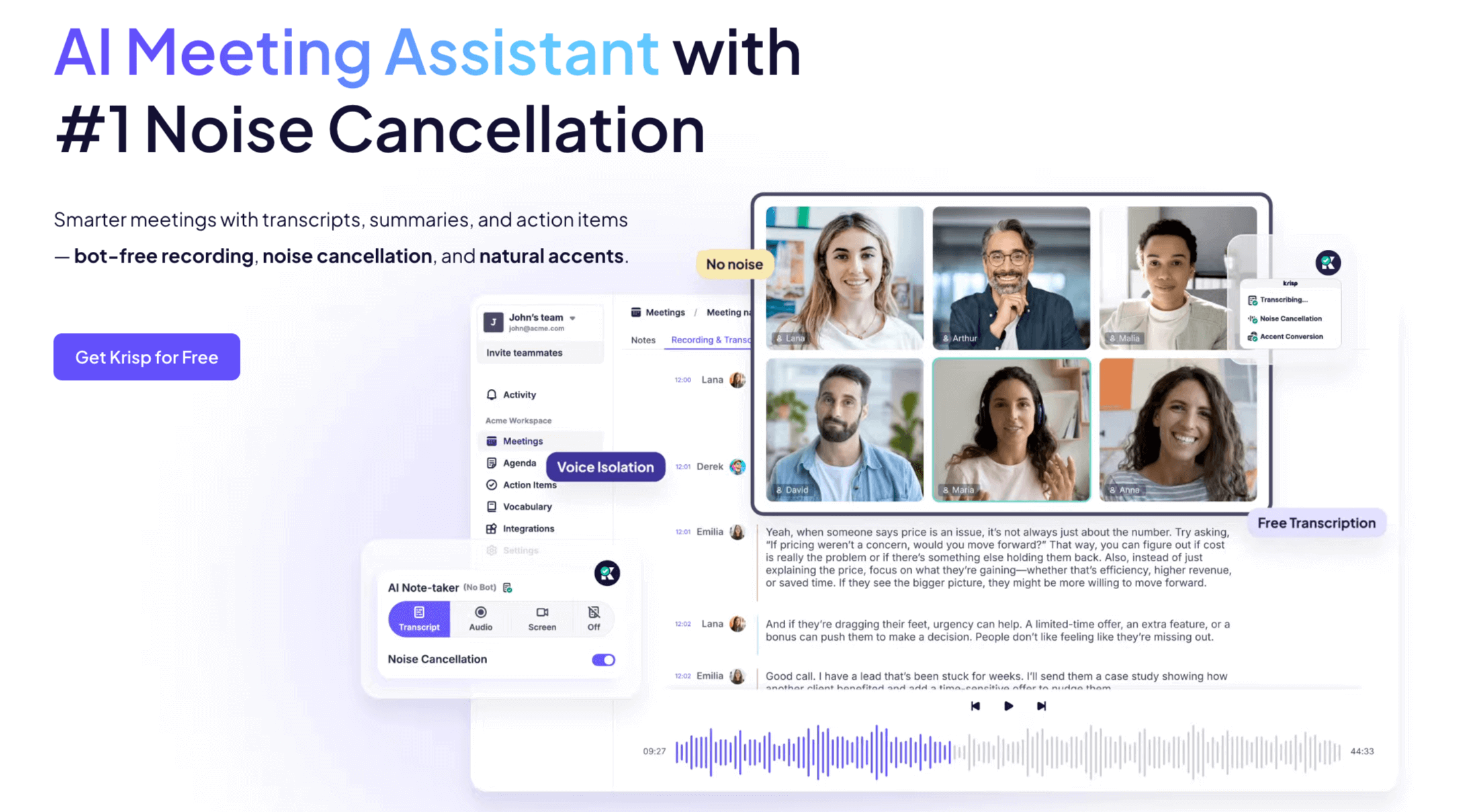
Here’s the during-meeting problem nobody else on this list solves. You want the conversation captured, but you don’t want a clunky bot named “Notetaker” sliding into the participant list (it spooks clients), and you don’t want a transcript wrecked by the espresso machine in the café behind you. I tested this in a properly loud room, three people talking nearby and a blender going, and Krisp’s noise cancellation kept the transcript clean while everything else turned to mush.
Krisp runs quietly in the background as an AI meeting assistant. It captures notes, full transcripts, and summaries without a bot joining the call, and it works across Zoom, Meet, and Teams. Because it sits at the audio layer on your device, it also cancels background noise and echo in real time, for you and for the people listening to you.
Key features
- Bot-free AI note taker: notes, transcripts, and summaries with no visible participant
- Real-time, AI-powered noise cancellation for inbound and outbound audio
- Automatic meeting summaries with key points and action items
- Meeting transcription across Zoom, Google Meet, and Microsoft Teams
- Accent conversion for clearer cross-accent calls
How Krisp keeps your data private
Because Krisp runs inside your calls and handles audio, privacy isn’t a footnote. It’s the point. Krisp processes noise cancellation on-device, so your audio never leaves your machine just to be cleaned. The bot-free model means no third-party recording service joins your meeting. Krisp is GDPR compliant and SOC 2 certified, and it doesn’t use your data to train third-party AI models.
Pros
✅ No bot joining the call, better for client-facing and sensitive meetings
✅ Noise cancellation that holds up in loud rooms, which competitors don’t tackle
✅ Free plan covers transcription, recording, and noise cancellation
✅ Works across every major conferencing platform
Cons
❌ It’s the capture layer, not a scheduler or task manager, so you’ll pair it with other tools on this list
❌ The unlimited AI note-taker and accent conversion sit on paid tiers
💰 Pricing: 7-day free trial; Core starts at $8/user/mo billed annually, or $16/user/mo billed monthly. Advanced starts at $15/user/mo billed annually, or $30/user/mo billed monthly.
⭐ G2 Rating: 4.6/5 as of June 2026.
📌 Verdict: The highest-leverage addition to most meeting stacks, and the rare during-meeting tool that captures everything without a bot or a noisy mess.
5) Otter.ai and Fathom: best for transcript-first and free AI summaries
If your main need is a searchable record, these two are worth a look. With Otter.ai, I liked searching a transcript for “action items” and jumping straight there instead of scrubbing through audio, though speaker labels needed manual cleanup more than once. Fathom leans into free: its automatic post-call summaries are useful for a no-cost tool, which is why it shows up on so many shortlists.
Both are bot-based; they join the call as a participant. So if that’s a dealbreaker, the bot-free option above is the move. For a full hands-on comparison of this category, see our best AI note-taking apps roundup.
Pros
✅ Otter: strong search and transcript organization
✅ Fathom: capable free summaries
Cons
❌ Both join the call as a visible bot
❌ Otter’s free tier caps monthly minutes
💰 Pricing: Otter has a free plan with 300 monthly transcription minutes; paid plans start at $8.33/user/mo billed annually. Fathom has a free plan, with Premium starting at $16/mo billed annually and Team starting at $15/user/mo billed annually.
📌 Verdict: Both are strong transcript tools. Choose based on whether you are comfortable having a meeting bot join the call.
6) Slido: best for engagement, polls, and Q&A
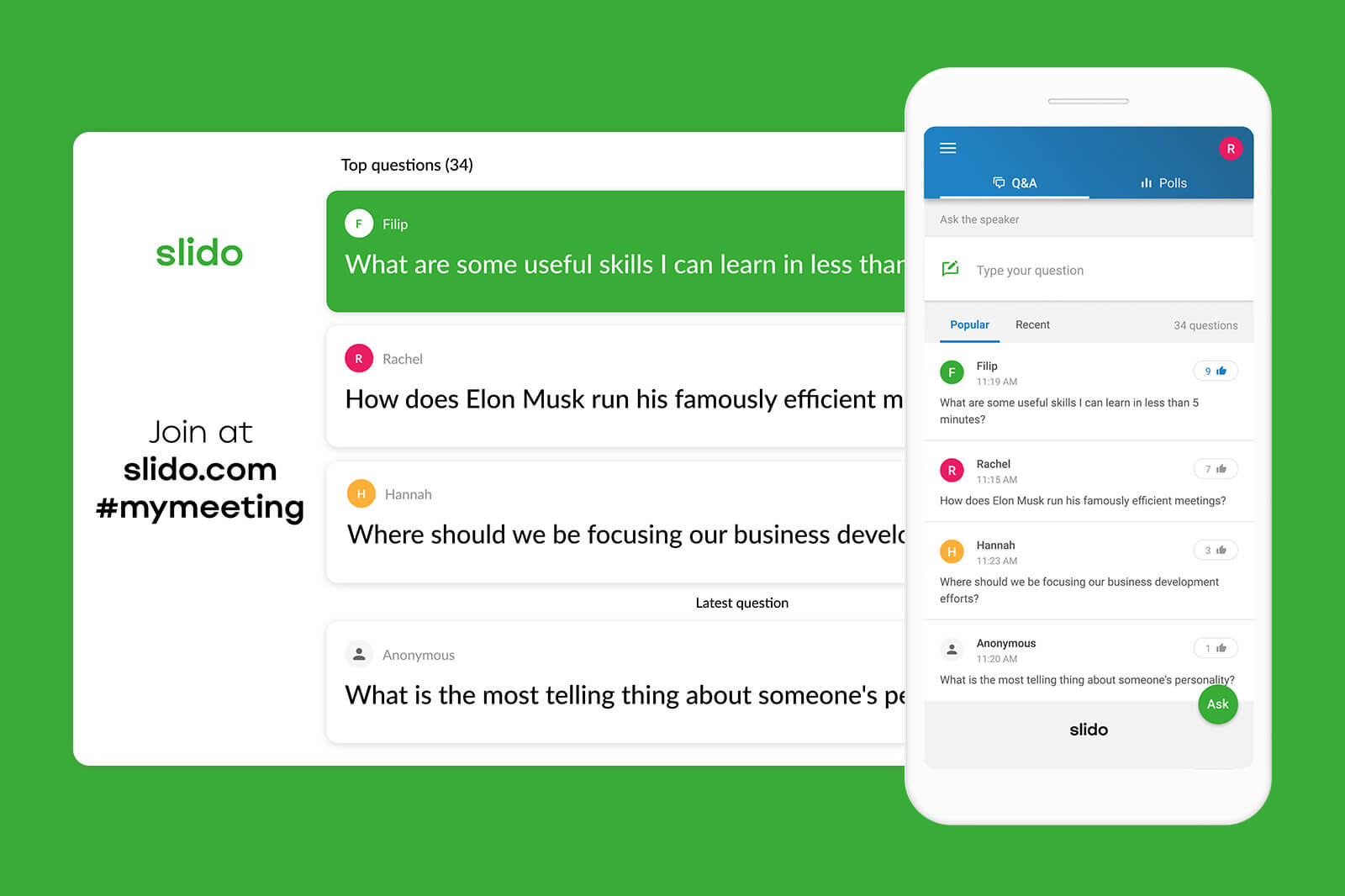
Slido earns its keep in the meetings where people go quiet. In an all-hands I ran, switching to anonymous Q&A doubled the number of real questions. People asked things they’d never raise out loud. Live polls, word clouds, and Q&A let everyone participate from their phones without interrupting.
Key features
- Live polls and word clouds
- Audience Q&A with optional anonymity
- Integrations with Zoom, Meet, Teams, and slides
Pros
✅ Surfaces honest input in big or hierarchical meetings
✅ Easy for attendees, no account needed
✅ Anonymous mode raises candor
Cons
❌ It’s an add-on, not a meeting platform on its own
💰 Pricing: Forever-free Basic plan available; paid plans start at €15/mo.
📌 Verdict: Best for all-hands, training sessions, webinars, and meetings where audience engagement is the main goal.
7) Miro: best for visual collaboration and workshops
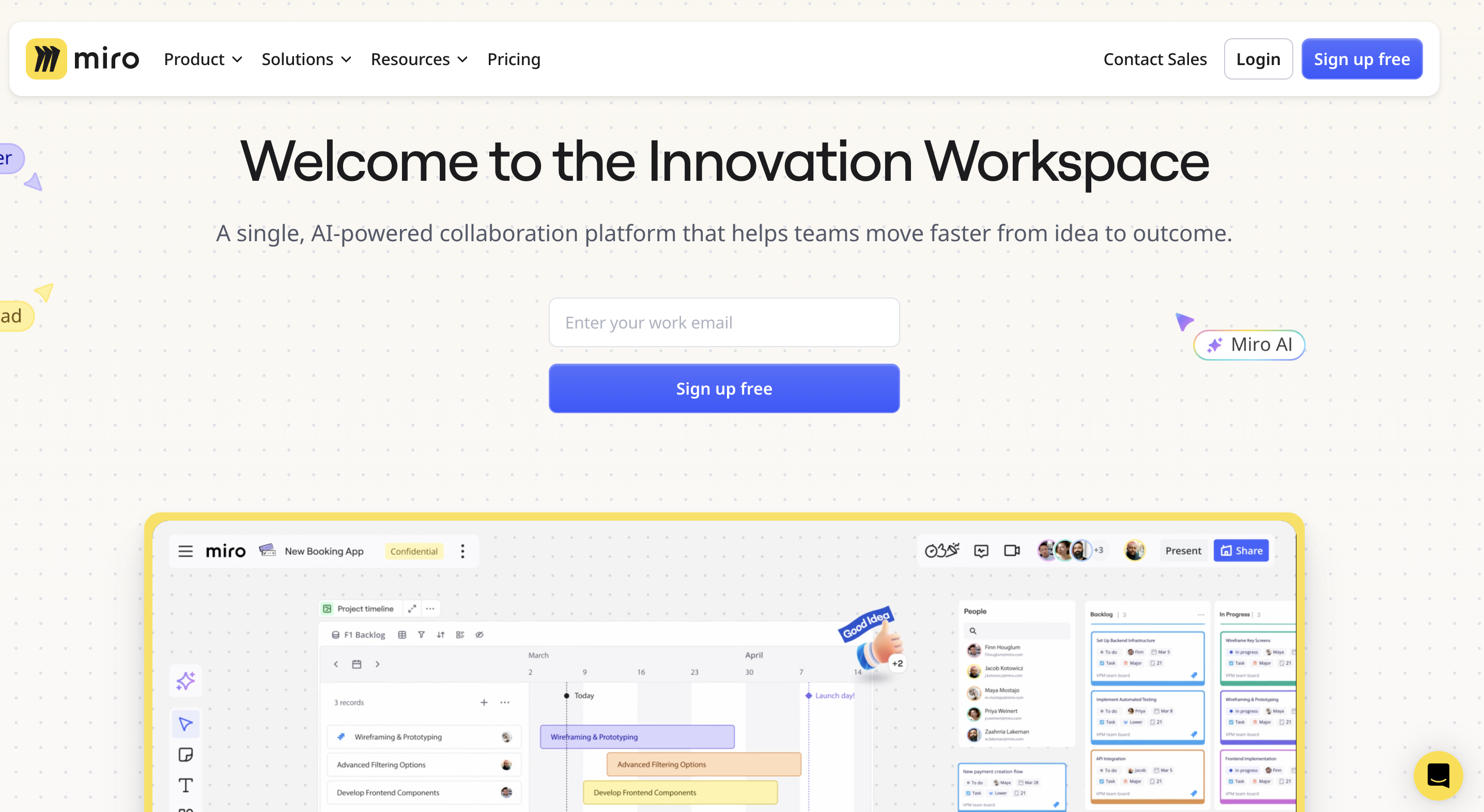
When a planning session would’ve died on a plain video call, dropping everyone onto a Miro board kept it alive: sticky notes flying, people dragging ideas around in real time. It’s an infinite whiteboard with templates for brainstorms, retros, and roadmaps.
Key features
- Infinite collaborative whiteboard
- Templates for workshops, retros, and planning
- Real-time multi-user editing
- Integrations with the usual suspects
Pros
✅ Keeps remote workshops energetic
✅ A huge template library
✅ Great for visual thinkers
Cons
❌ Overkill for a simple status meeting
💰 Pricing: Free plan available; paid plans start at $8/member/mo billed annually.
📌 Verdict: Best for brainstorms, workshops, and visual collaboration sessions, not routine syncs.
After the meeting: share & track
A meeting’s value shows up in what happens next. If the notes sit in one person’s doc and the decisions never become tasks, you’ll just meet about the same thing again. These tools turn talk into tracked action.
8) Notion: best for sharing and storing meeting notes
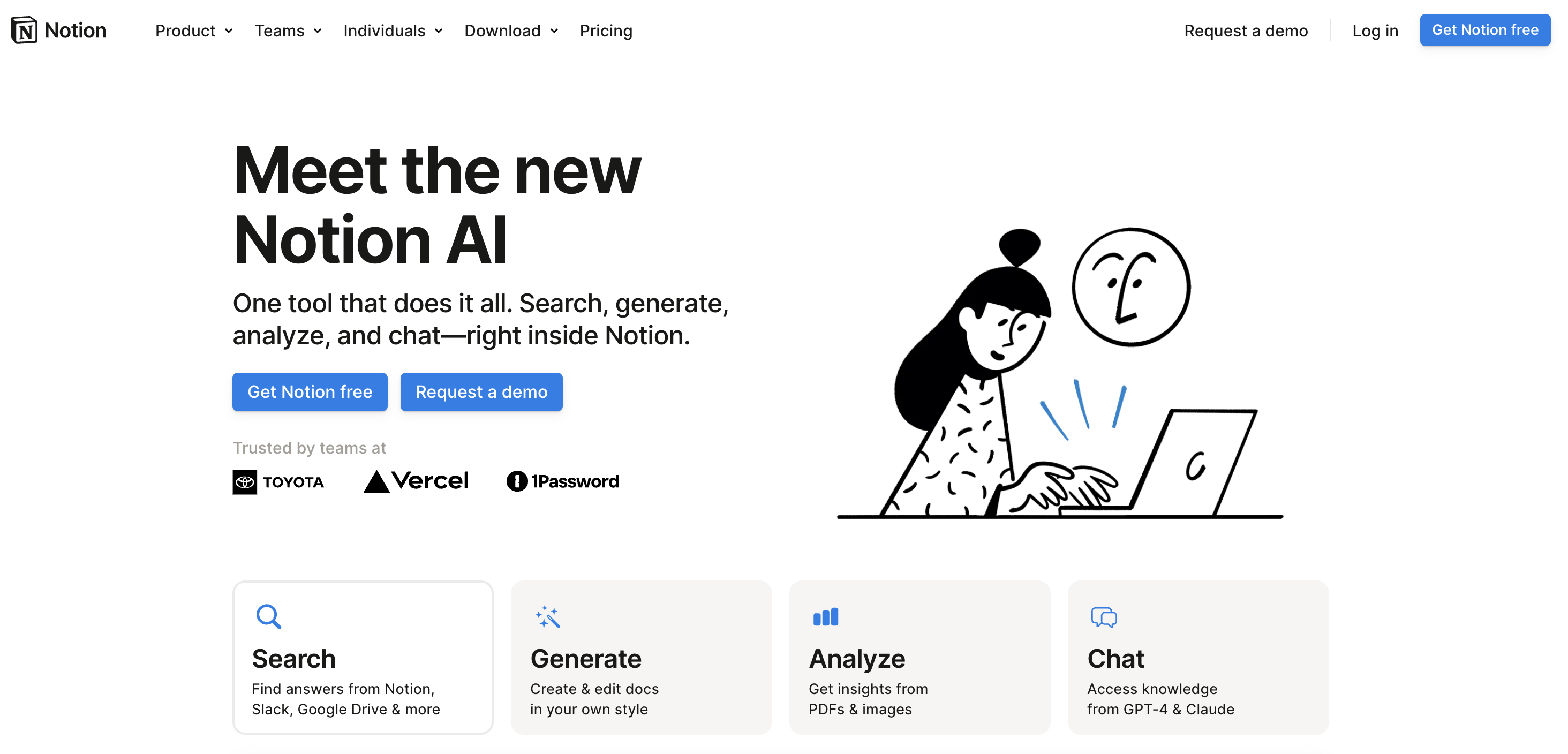
Notion is where notes go to actually get found later. I keep a meetings database where every recap lands in the same place with the same template, so six weeks on I can pull up what we decided without digging through email. It’s flexible docs, wikis, and databases your whole team can share.
Key features
- Shared docs, wikis, and databases
- Meeting-note templates
- Easy linking and search across your workspace
Pros
✅ One source of truth for notes and decisions
✅ Flexible enough for any team
✅ Strong free plan for individuals
Cons
❌ Needs a bit of upfront setup to stay tidy
💰 Pricing: Free plan available; Plus starts at $10/seat/mo.
📌 Verdict: Best as a central home for meeting notes, decisions, and docs your team needs to reference later.
9) Asana: best for turning decisions into tracked tasks
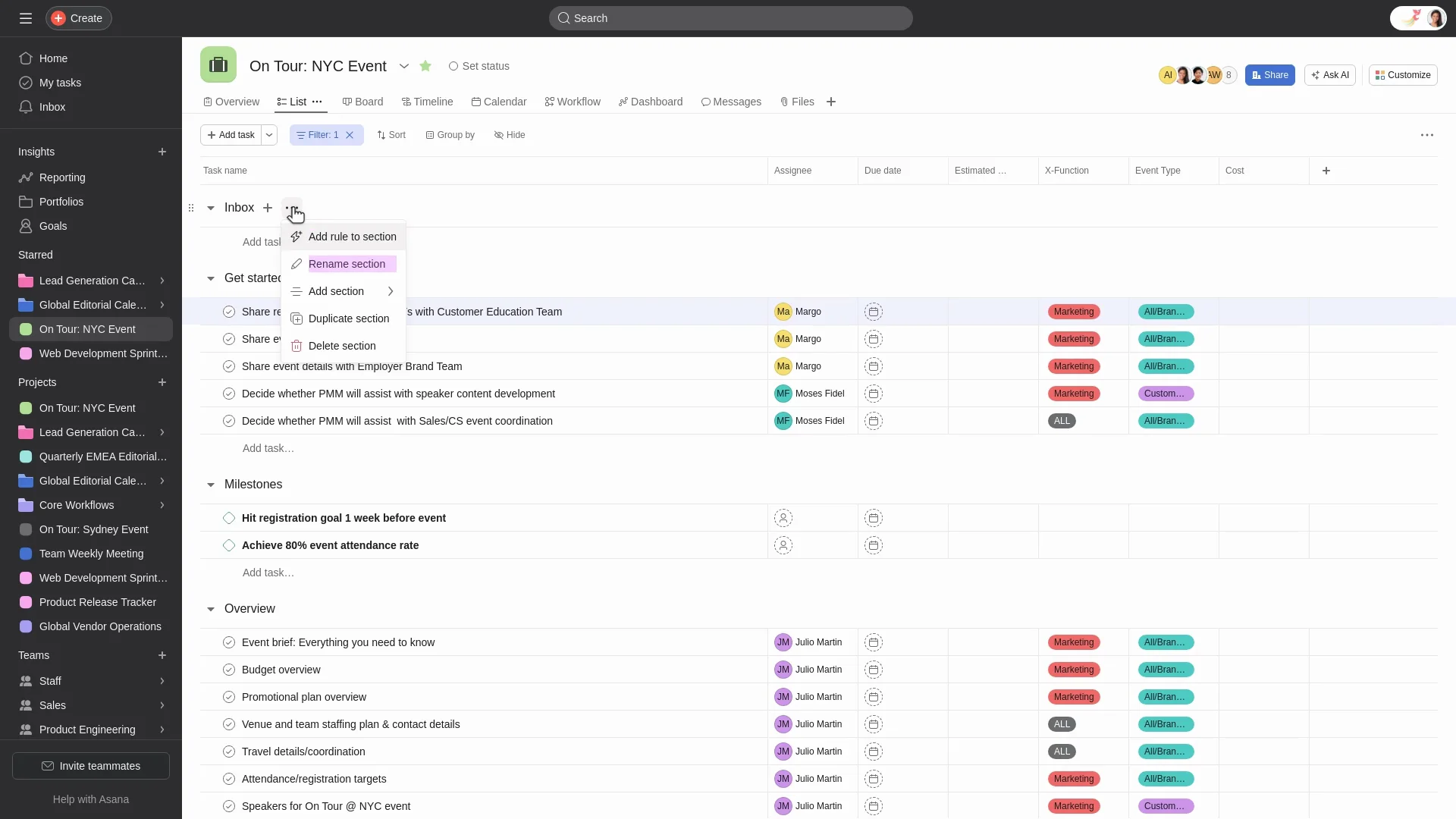
The follow-up step most teams skip: turning “we should do X” into a task with an owner and a due date. Asana is where I move action items so they don’t evaporate, and integrations can pull them straight from your notes. (ClickUp is a solid alternative if you want more customization.)
Key features
- Tasks with owners, due dates, and dependencies
- Projects, boards, and timelines
- Integrations with notes and conferencing tools
Pros
✅ Makes accountability visible
✅ Scales from small teams to cross-functional work
✅ Clean, approachable interface
Cons
❌ Can feel heavy for a two-person team
💰 Pricing: Free Personal plan available; Starter begins at $10.99/user/mo billed annually, or $13.49/user/mo billed monthly.
📌 Verdict: Best for turning meeting decisions into assigned, trackable work.
10) Slack: best for replacing status meetings with async updates
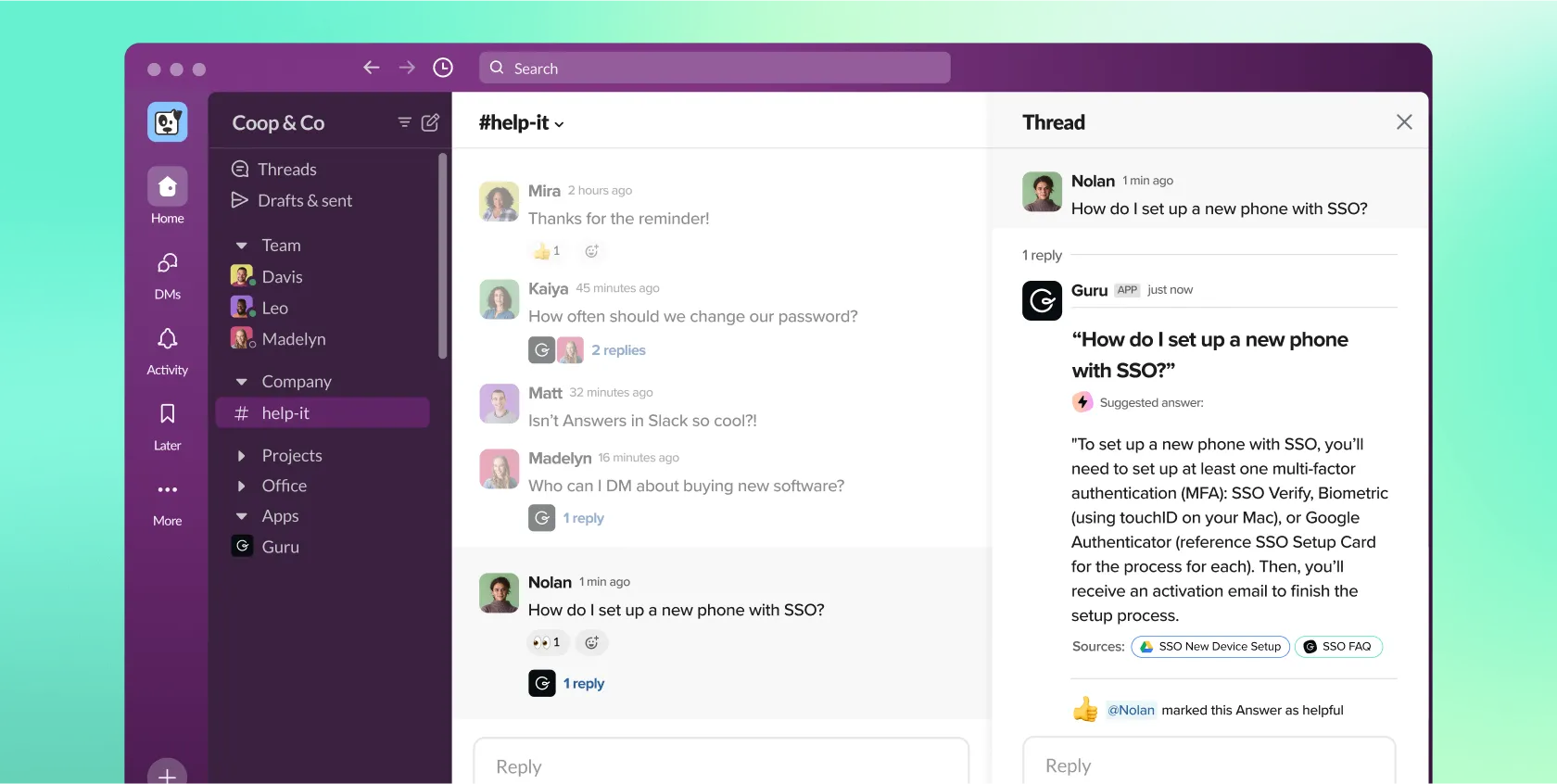
The most productive meeting tool is sometimes the one that cancels the meeting. A lot of our old status syncs are now a Slack thread or a quick huddle, with the same alignment and zero calendar time. Channels, huddles, and integrations keep updates flowing without a standing call.
Key features
- Channels and direct messages
- Huddles for quick audio/video
- Integrations with nearly everything on this list
Pros
✅ Replaces many “quick syncs” outright
✅ Keeps context in one searchable place
✅ Huddles for when you do need to talk
Cons
❌ Notification overload if channels aren’t governed
💰 Pricing: Free plan available; Pro starts at $7.25/user/mo billed annually, or $8.75/user/mo billed monthly.
📌 Verdict: Best for cutting meeting volume in the first place. Half your status meetings probably could have been an email, or a Slack message.
How to build your meeting productivity stack
You don’t need eleven tools. You need one good pick per stage. A few starting points:
- Solo / client-facing: Calendly (book it) + Zoom (run it) + Krisp (capture it). Three tools, every stage covered.
- Small team: Fellow (agenda) + Zoom + Krisp + Asana (follow-up) + Slack (cut the status calls).
- Workshop-heavy team: add Miro for collaboration and Slido for engagement.
If you only add one thing, make it the during-meeting capture layer. Scheduling and task tools are everywhere; an AI meeting assistant that captures everything without a bot and keeps your audio clean. It’s the piece most stacks are missing, and it pays off in every meeting. For more options, check out our roundup of the best AI meeting assistants.
Conclusion
Full disclosure: Krisp is our product, so we’re not a neutral party. That said, the list above is organized around real meeting workflows, and we’ve called out where other tools lead: Calendly for scheduling, Fathom for free summaries, Asana for follow-through. The honest case for Krisp is narrow and specific: it’s the best way to capture a meeting without a bot in the room or noise in the transcript, and nothing else here does that job as well.
Pick one tool per stage, start with the free plans, and keep only what saves you time.
FAQs
What are meeting productivity tools?
Meeting productivity tools are apps that cut wasted time and effort across the meeting lifecycle: scheduling tools, video conferencing, AI note takers and transcription, engagement and whiteboard tools, and task trackers for follow-up. Most teams combine one tool per stage rather than relying on a single app.
How can I make my meetings more productive?
Tighten each stage. Schedule with a booking link to skip the email chain, set an agenda in advance, capture notes automatically with an AI assistant so you can stay present, and turn decisions into assigned tasks afterward. And cancel the meetings that could have been a message.
What tools do I actually need for productive meetings?
At minimum: a scheduler like Calendly, a conferencing tool like Zoom, Google Meet, or Microsoft Teams, and an AI capture tool like Krisp. Add a task manager like Asana and an async chat tool like Slack once your team grows. One solid pick per stage beats a drawer full of overlapping apps.
What is the 40-20-40 rule for meetings?
It is the idea that meeting success is split roughly 40% preparation, 20% the meeting itself, and 40% follow-up. The takeaway: most of the value comes from prep and follow-through, which is why before- and after-meeting tools matter as much as the call.